Phosphorus as an inorganic mineral and the enzyme phytase are essential elements in the swine feed. Phosphorus represents 0.5 to 1.0 % of feed costs for the producer.
Different elements are considered when looking for solutions that lead to a reduction in feed costs for the animals. Due to the increase in prices in this sector, the producer is forced to look for a way to reduce these costs, analyzing factors such as the type of power supply to be provided, The processing of the feed and even the content of phosphorus and phytase that the feed products must have.
The following are five (5) factors to consider in order to reduce feed costs in swine production.
1PROCESSING OF ANIMAL FEED / CONCENTRATES: The pelleting process in animal feed production reduces waste and reduces the Feed Conversion Index (FCR) by up to 2%, which easily offsets the costs associated with pelleting. By applying pelleting processes, the residual feed in the feed bunkers decreases considerably, which in turn represents a significant saving in waste.
It is important to mention that proper grind size is very important to ensure the intestinal health of the animal.
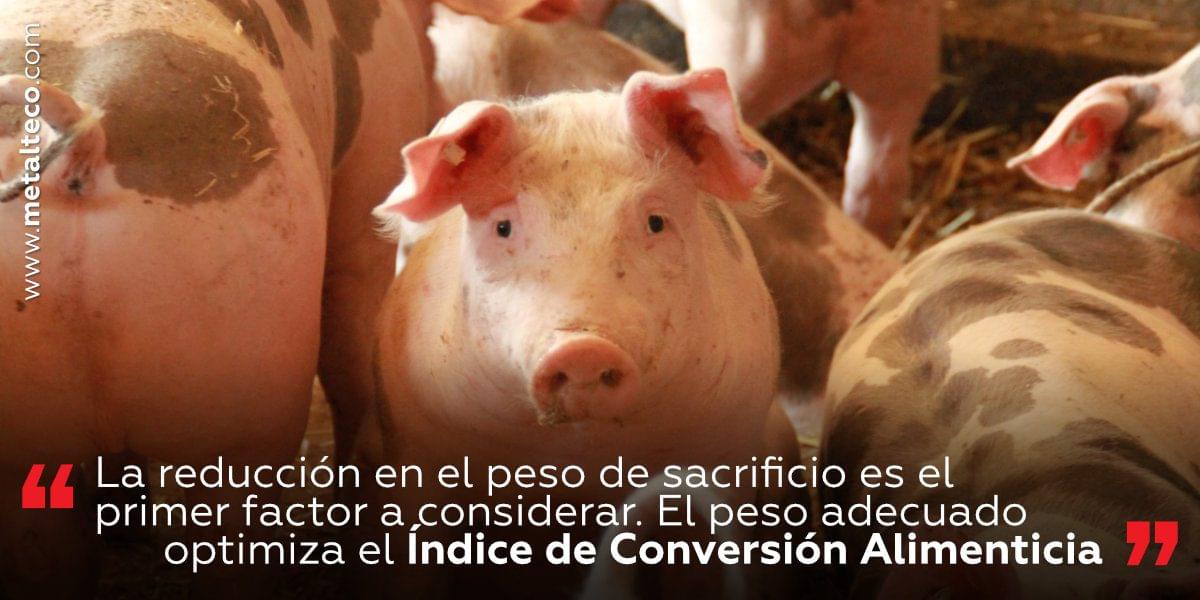
2 THE BURDEN OF SACRIFICEThe reduction for slaughter weight is the first factor to consider. This can be observed in the feed conversion ratio (FCR), which is proportional to the weight gain acquired by the animal in its growth process. The producer should focus on the body gain after 80 kg, since it is there where the fat gain rises. It is advisable to maintain weight measurements no higher than 115 kg to maintain an excellent feed conversion rate.
3 MULTIPHASE POWER SUPPLY: The highest feed consumption in pigs occurs in the finishing phase (from 80 kg to slaughter). For this reason, it is advisable to add different feeding phases (use of 2 or more balanced feeds) in the finishing phase, to reduce the net energy and lysine levels in these diets. This allows saving some costs related to starch. As mentioned in the previous point, in this finishing phase the pig grows more fat than muscle.
4 THE COSTS OF FEED ADDITIVES: The variable characteristics of additives make it necessary to analyze at what time and for what purpose they are supplied. This in order to generate a correct formulation of the feed. Some studies have proven that the restriction of vitamin and mineral premixes before the animal is slaughtered (more precisely in the last month of life) does not affect technical performance.
Premix costs represent about 4% of the total concentrate/balanced feed value. Vitamins A, D and E, which account for about 50% of premix cost, have accumulated in the liver during growth and are less prone to failure in later stages. Savings of up to 1% in feed cost can be obtained with proper premix and additive formulation.
5 PHOSPHORUS IN FOOD: Phosphorus is essential in feed. However, it is the most expensive inorganic mineral used in swine feed. As mentioned at the beginning of this article, it represents 0.5 to 1.0 % of feed costs for the producer. In the United States, due to current legislation, the digestible phosphorus content has been reduced compared to other countries, without affecting the technical performance of the pig. This reduction is reflected in savings for the producer.