Today, the eyes of the world are on the conflict between Ukraine and Russia. The effects of such a conflict extend to all corners of a globalized world, in which foreign trade operations play a vital role in the production and supply chain.
GRAINS AS RAW MATERIAL:
While it is true that there are more producers globally, Russia and Ukraine have positioned themselves as the most important producers in the world. largest grain producers in the world. These grains (wheat, corn and sunflower seed) are the main raw materials for the production of animal feed.
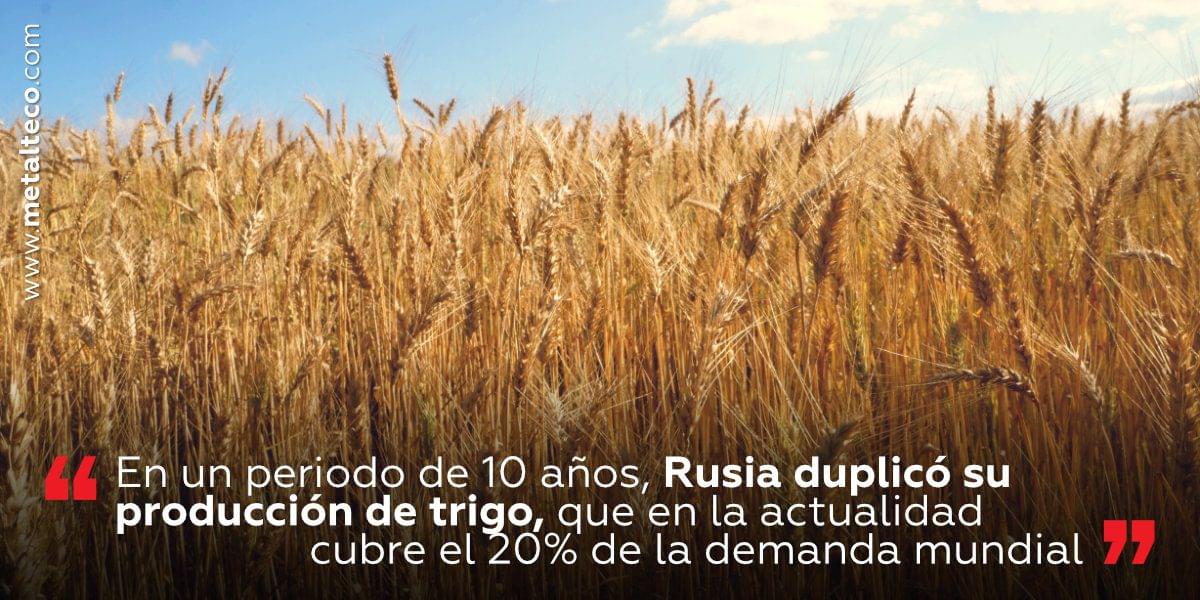
“Over a 10-year period, Russia doubled its wheat production, which is largely exported, comprising almost 20% of the world's demand.”.
Major buyers of Russian exports include North African and Middle Eastern nations, especially Turkey and Egypt. Like Russia, Ukraine is one of the world's leading grain producers, mainly due to its fertile soils. Ukraine is currently the world's fifth largest exporter of wheat and the world's fourth largest exporter of corn.
Reuters analyst Karen Braun warned of a development that could change the global corn supply/demand balance: “It would be devastating for the global corn market if Ukraine is unable to plant its crop this spring. It accounts for 16% of exports.”.
On March 6, 2022, the rise in world grain markets was evident. On the Chicago exchange, wheat traded at US$475 per ton, registering a rise of 6.5%. Plaice and corn, on the other hand, recorded increases of 1.7 and 2.8% respectively, trading at 627 and 306 dollars per ton.
These price increases have a direct impact on Latin American markets, so raw materials in our continent are expected to rise in response to the excess demand caused by the shortage of cereals from Russia and Ukraine.
THE IMPACT ON THE FERTILIZER MARKET:
Agriculture in Latin America is highly dependent on the supply of fertilizers. As can be seen in the figure, 41% of imports into Latin America from Russia are fertilizers. Brazil, for example, imports a total of 85% of the fertilizers it uses for its crops, and of this 85%, one fifth comes from Russia.
Colombia imports 42% of urea fertilizer from Russian and Ukrainian producers. According to experts, the country will experience an irremediable rise in the cost of this fertilizer, which will have an impact on the entire animal and human food production chain, as well as on the market for fibers, fuels and medicines obtained from products derived from agriculture.
«It will further increase the cost of inputs, as there will be a decrease in supply, and this will have an impact on the cycle of generalized food price increases.” Rodolfo Correa, president of the National Council of Secretaries of Agriculture of Colombia.
Before the conflict in Ukraine, farmers around the world were already struggling to secure fertilizer supplies. Some of them doubled in price in the last year, due in large part to rising natural gas prices, among other global phenomena such as power outages at Chinese fertilizer plants and Hurricane Ida in the United States.
The war in Ukraine and the sanctions imposed on Russia have worsened the situation. According to analysts, this conflict increases the prospect of a prolonged supply crisis, which will undoubtedly be reflected in feed production in Latin America.